So someone you love just trusted you with something about the way that they love. Maybe this means that he loves men, or that she loves women. Maybe it means that this person could fall in love regardless of gender. Or, maybe this person loves themselves enough to finally admit to you that the name and pronouns you’ve always use with them don’t fit who they really are. First of all, congratulations to whomever that person may be; coming out of the closet is a huge accomplishment for members of the LGBTQ+ community, a milestone, and, hopefully, a relief.
Of course, if you are kind enough to have sought out my blog, you probably already know enough to be flattered by the trust this person has show to have in you, you probably have done your best to show support. But it’s alright if you still feel a little confused, if you have questions about how to proceed with this new information without stepping on toes or violating boundaries. If you are new to allyship, or have limited knowledge of the queer community, I recommend both this article from USA today, to help familiarize yourself with some LGBTQ language and this excellent Ted Talk, in which Ash Beckham universalizes the coming out experience. Familiarizing yourself with these materials will go a long way in showing your loved one that you care for them and have taken their new expression of identity seriously. Afterwards, consider some of the following to keep your relationship with your loved one strong.
1. Don’t assume they are done coming out. While this person has come out to you, they may still have some important disclosures ahead of them (other close friends, family, parents, etc). Research has found several different classifications of coming out conversations, ranging from coaxed to confrontational in nature. It is now your responsibility to support your friend through these subsequent disclosures.

2. Get online… Studies have shown time and time again that queer people are discovering and refining their identities online. In fact, research shows that social media use among queer people, especially young adults, helps many find the words for their identity and representative role models. If you have questions about your friends identity, be proactive and respectful in finding an answer! In a recent article from the Journal of Homosexuality researchers identified online forums as safe havens for members of the LGBTQ community, places full of resources and hope. Spending a little time in one of these spaces may help you understand some of what your friend is experiencing that they may be uncomfortable bringing up.

3. …but respect queer spaces. My previous piece of advice comes with a major caveat: queer spaces must remain queer. A study on queer forum Empty Closets provides a list of potential forum uses, including storytelling, narratives of coming out experiences, identity quests, personal struggles to understand one’s identity, seeking validation from peers, and, most importantly, community, the chance to be understood by others like oneself. All of these uses are distinctly queer, and no matter how pure your intentions may be, you should never assume that your question is more important than the safe space you’re visiting. Be respectful, learn what you can. And, if all you want to do is conduct a google search, please at least read this article first to protect yourself from misinformation.
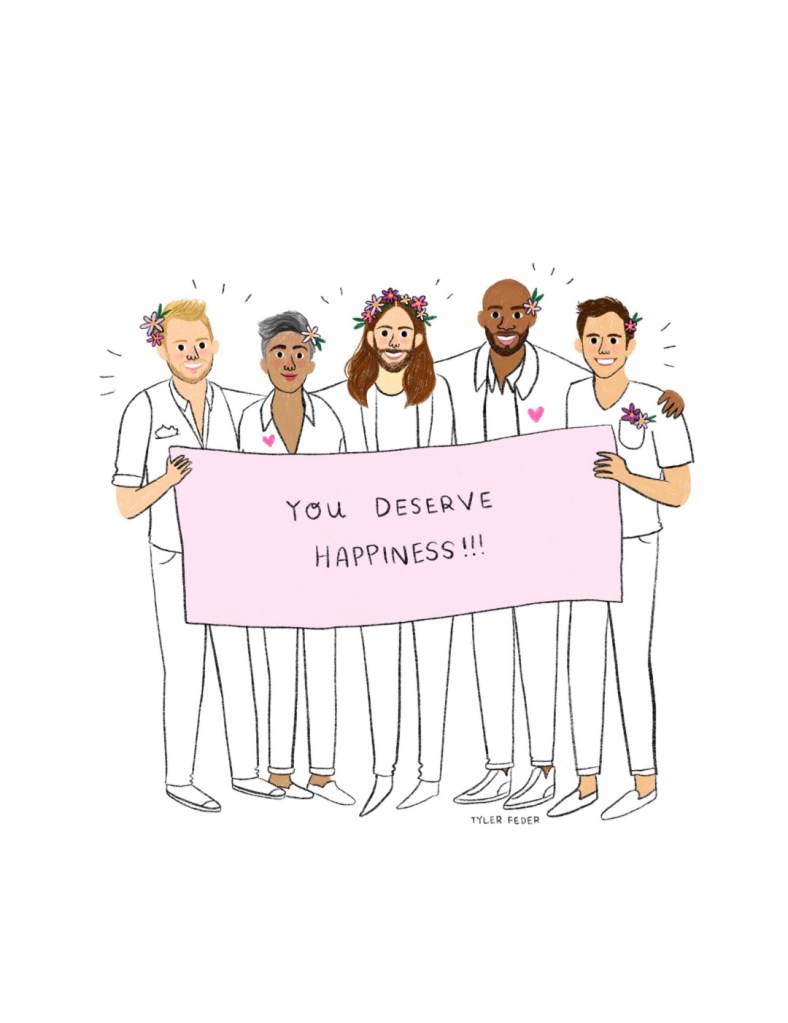
In the words of the immortal Johnathan Van Ness: “If you numb the vulnerability you also numb joy, happiness, connection”
4. Be hopeful. While learning a loved one is queer may be a little scary, after all, much of queer history is fraught with conflict and prejudice (a timeline here), progress is, if you’ll pardon the pun, coming out too. While in 2002 a study of perceived instructor trustworthiness and likability showed major discrepancies between queer and straight professors, when replicated in 2018, results showed no discernible differences. Students were equally as warm and attentive towards queer professors who spoke openly about their identity in the classroom. While this may seem minor, it does provide hope that your friend will find a place where they can flourish, maybe in one of these top ten professions for members of the LGBTQ+ community, or maybe anywhere they like.
Overall, if you are interested in keeping your loving relationship with someone after their coming out, it is most important that you simply continue to treat them with love. Respect who they are, learn all you can, and remember, always, love should be celebrated not questioned. 💕💕✌
 Alli Too Well